
By Gregory Conway
I was recently scrolling through NYRB books I haven’t read, checking for any Nordic writers I might want to check out. I’ve recently been digging into the Icelandic sagas for the first time. I’ve started with Grettir’s Saga and also grabbed a copy of Egil’s Saga. Im in a mindset of outlaws and viking raiding, so I was particularly drawn to the NYRB book The Long Ships by Frans G. Bengtsson when I read a little bit about it.
The NYRB edition features an introduction by Michael Chabon (which really makes this a scandi-must-order at Greg HQ because The Adventures of Kavalier & Clay was my favourite novel as a teenager). The book, originally published in two parts (1941 & 1945), is known as one of the best viking novels to ever exist, but this isn’t the rabbit hole I went down.
I read a little bit about Bengtsson’s life; he wrote a doctoral thesis on Chaucer, translated Milton’s Paradise Lost and Thoreau’s Waldon and was known for an incredibly strong memory – reciting long passages off the cuff. He strongly opposed Germany’s occupation of Norway and refused to allow a Norwegian translation of The Long Ships under German rule, as they would have changed the background of the Jewish characters in the book. His life was interesting and his output vast, but the rabbit hole I entered was due to a quick glance about his time at The University of Lund, an uncited line on Wikipedia saying he didn’t devote much of his time to studying and rather read poetry and played chess.
****
I immediately did some digging. Bengtsson was actually quite a good chess player and represented Sweden at the Nordic Congress tournament in 1916. He played the second tier of the tournament (referred to as Class 1, while there was a Master level and also a Class 2 tournament also held between July 3rd and July 15th, 1916).
The tournament was the highest level of Bengtsson’s play. He had some beautiful games, some heartbreaking losses and came 6th/14 in the tournament. He regarded the tournament as a tremendous failure and never competed in a high level tournmant again, the 12 days in July are the only games ever recorded, it is beautiful that the records and games still exist of this scandi-author’s chess games, 109 years later. I wanted to share three of the games the writer played in this tournament and offer some minimalist commentary, for anyone ever attempting the same rabbit hole in the future.
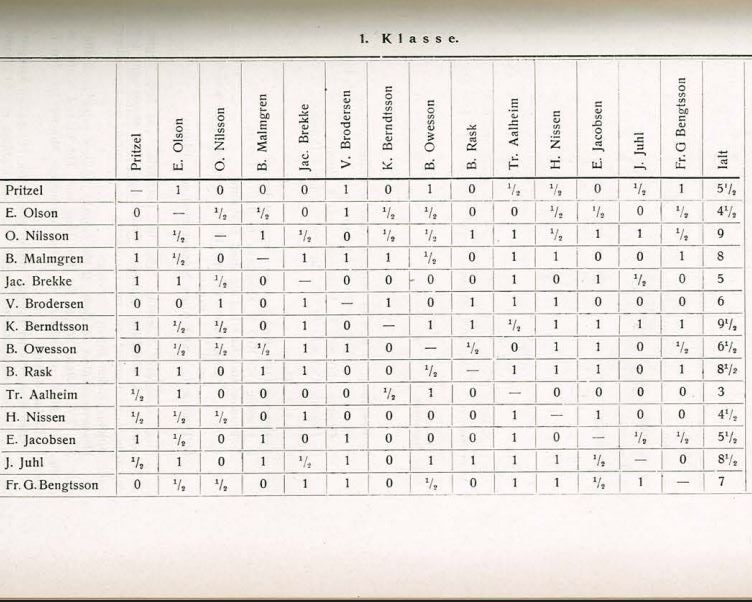
Class 1 tournament scores at the 1916 Nordic Congress tournament.
source: Tidskrift för Schack, 8-9/1916, pp. 120-156
****
GAME 1:
White: Frans G Bengtsson
Black: Trygve Aalheim
Scandinavian Defense, Boehnke Gambit.
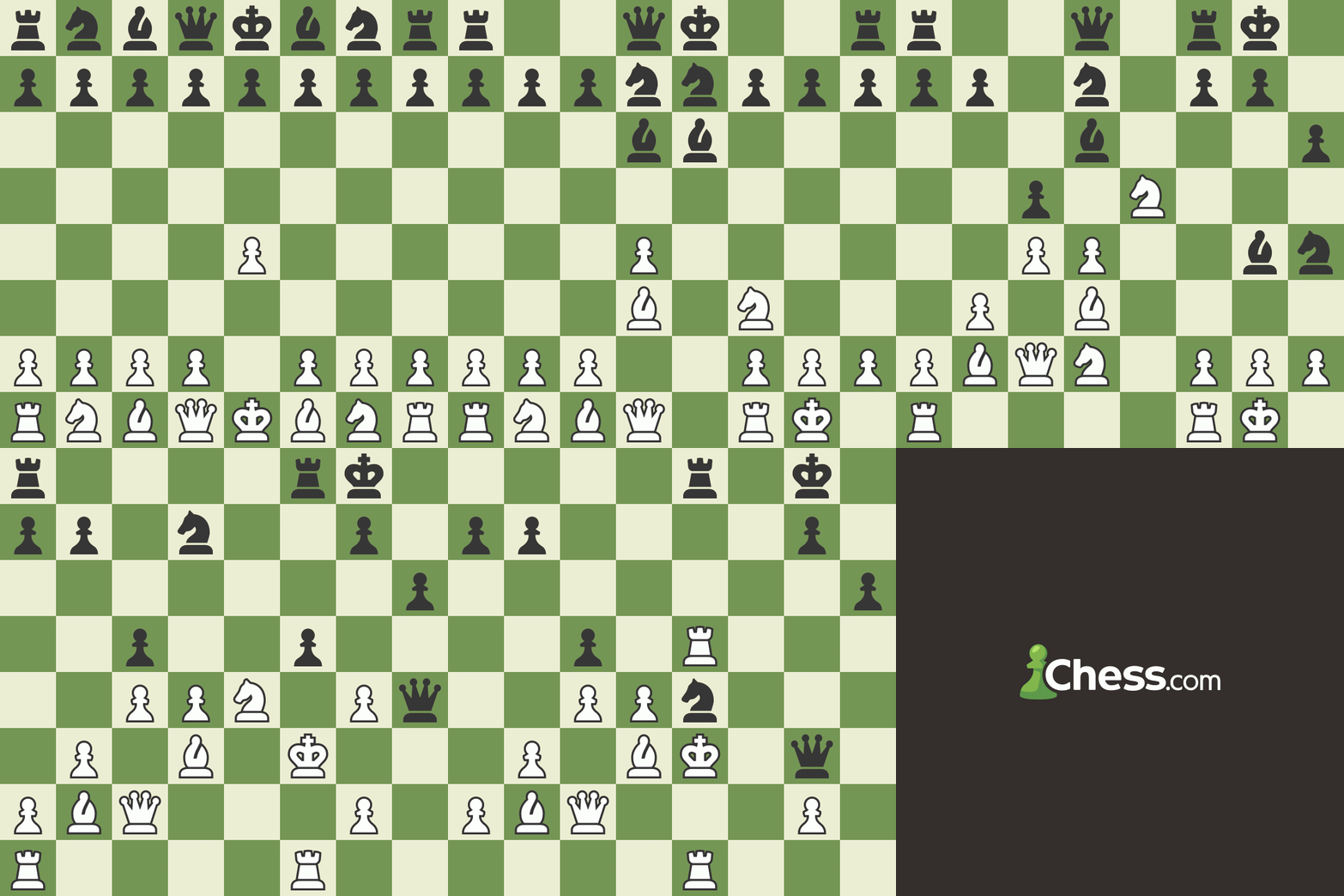
Trygve Aalheim should be imprisoned for showing this dubious gambit with the black pieces. The idea is to sacrifice another pawn than the traditional scandinavian defense by playing e6 on the second move with black pieces, capturing with your bishop and having a lead in development. The line is dubious because if white plays solidly and doesn’t fall for any early traps, white’s advantage is insurmountable. Bengtsson has essentially won by move 3, with the evaluation bar at +1.63.
This game in Copenhagen is the first recorded game of the Boehnke Gambit, which Bengtsson made quick work as showing as terrible. No one else ever played this opening again in the 1900s.
In a 2023 Titled Tuesday, a 3 minute weekly Blitz tournament, the Boehnke gambit made its triumphant return. Daniel Dardha was matched against a player rated almost 1000 elo points lower and brought out this disgusting play, using it as a tool to get a lower-rated player out of their preperation. 108 years after Aalheim first played this opening against Bengtsson, it got its first win.
****
GAME 2:
White: Axel Carl Martin Pritzel
Black: Frans G. Bengtsson
Ruy López Opening: Berlin, Improved Steinitz, Chigorin Variation
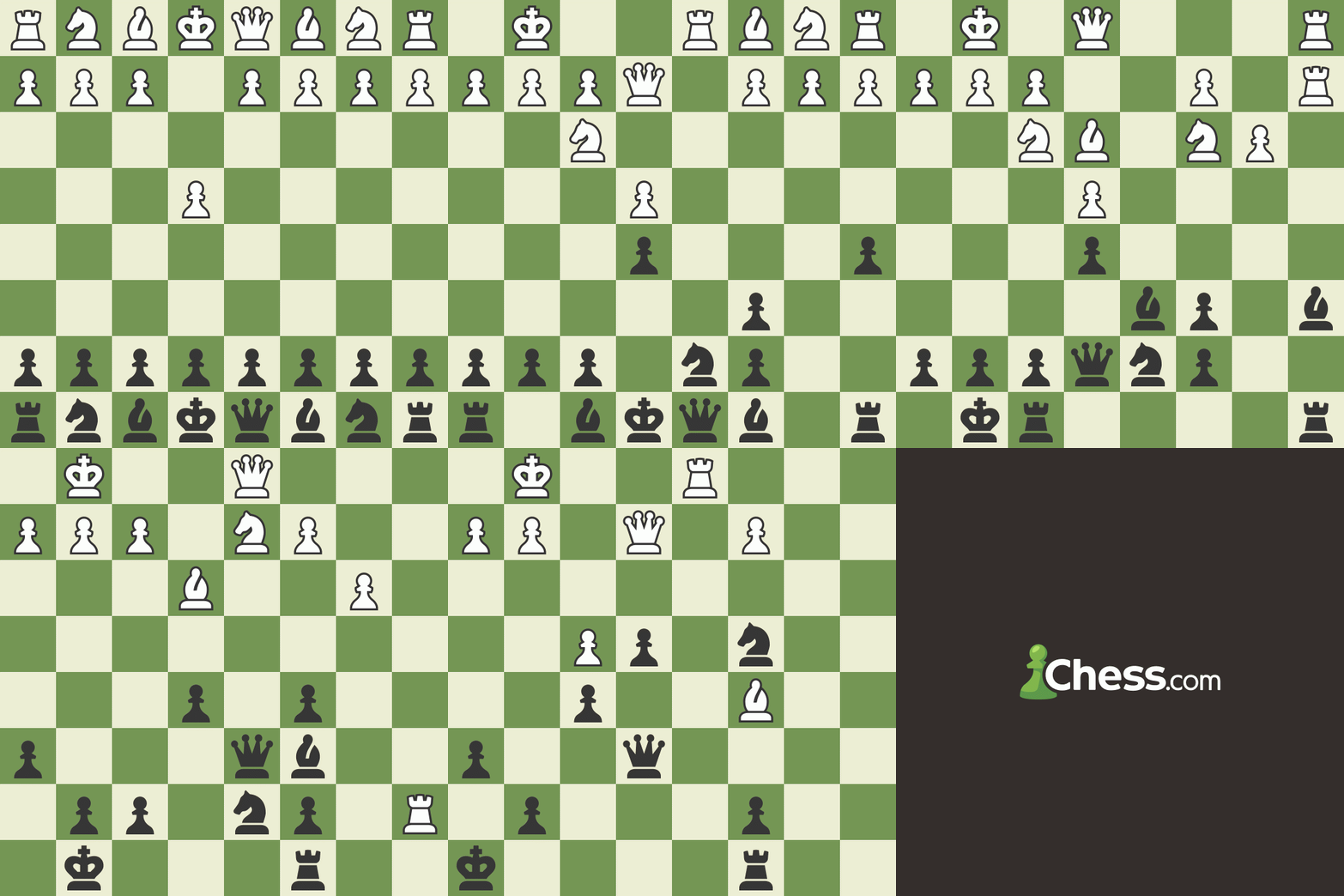
Here we see Bengtsson play a Ruy Lopez from the black side of the board. The Chigorin variation, named after Mikhail Chigorin, a Russian chess legeng who played for the World Championship twice (losing both attempts to Wilhelm Steinetz). Chigorin represented the Romantic era of chess, beautiful games, sharp tactics, classic openings and prioritizing winning in style, over winning a game. This is a romantic and heartbreaking game.
For 37 moves Bengtsson builds up a slow and game-winning lead. He has +4.3 on the evaluation bar and is close to getting the win. On the 39th move, Bengtsson takes the rook, knowing the bishop is pinned and can’t recapture his rook, it’s a free rook… but Pritzel finds a brutal tactic on the 40th move, Queen takes the h6 pawn, immediately ending the game with an unstoppable checkmate. Sometimes its just one mistake, one miscalculation to lose everything from a game you slowly built an advantage with in inches.
A heartbreaking loss.
****
GAME 3:
White: Viggo Broderson
Black: Frans G. Bengtsson
Queen’s Gambit Declined: Ragozin Defense
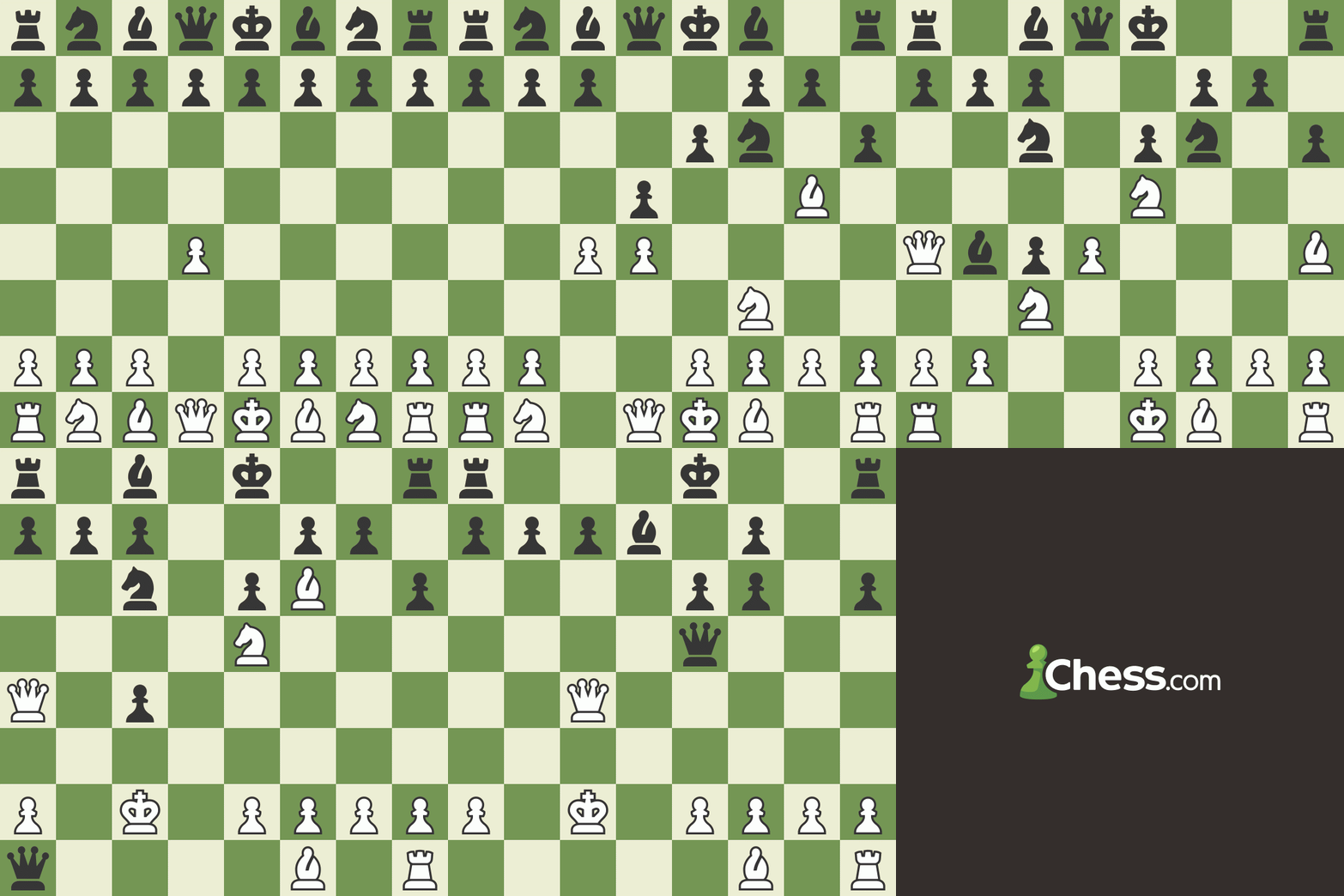
Viggo Broderson was a Danish composer and pianist who plays the Queen’s Gambit against our hero, Bengtsson. Broderson makes a blunder on move 8, mistakenly putting his knight onto e5. Bengtsson immediately strikes into the centre with his queen, taking the d4 pawn while forking the two knights. The game is over.
The e5 blunder in the Ragozin defense has actually been played twice, our composer is not alone. In 2017, 101 years later. WGM Inga Charkhalashvili sadly made the same blunder, against Deimante Daulyte-Cornette. The history of chess is beautiful, seeing positions come around again with 100 year gaps, twice, just from one 1916 tournament in Copenhagen is the romanticism of chess history. Frans G Bengtsson will forever be known for The Long Ships, but that doesn’t mean the games he played in one July tournament, 109 years ago, aren’t worth our time.
 lønningspils
Leave a comment