
By Gregory Conway.
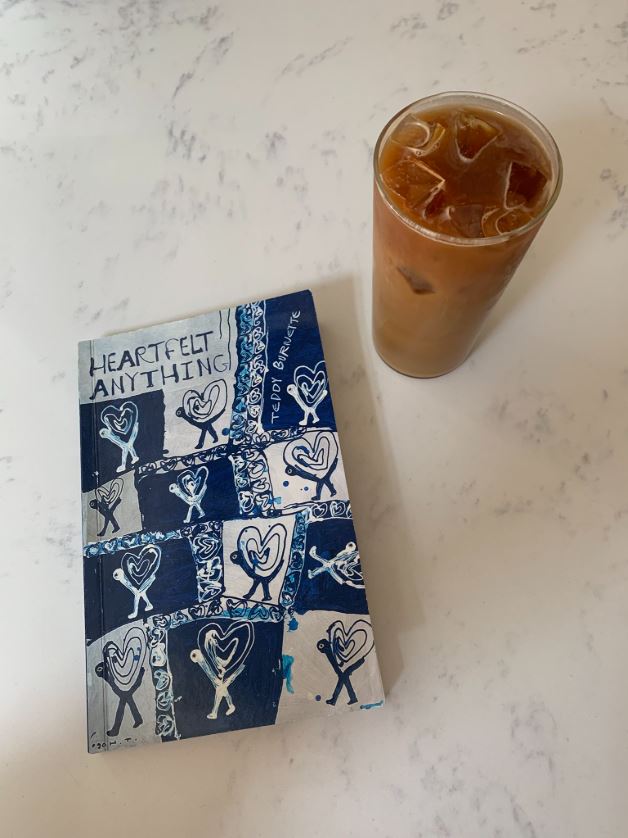
Teddy Burnette is a writer I admire from New York. His novel, Heartfelt Anything, has been one of my favourite books I’ve come across the past few years. Recently we have both been diving heavily into the works of Icelandic legend Halldór Laxness. Today, February 10 2026, Archipelago Books is publishing A Parish Chronicle, a new work by Halldór Laxness so we got tohether to catch up on all things Nordic literature & of course, Teddy’s own work.
****
LP: Hey Teddy, thank you for joining Lonningspils for a chat this evening!
I believe you are gearing up for a winter snowstorm in NYC as Peterborough is hitting crazy cold temps as well (possibly -31c tonight!), which feels like perfect weather to chat about Nordic Literature, how is your day going?
TB: My day is going well, very happy it’s friday. I was out in California this past weekend which might have been a week too soon ahead of this storm, though we’re not getting nearly as low in the temps as you. But either way, a perfect time to talk about nordic literature.
LP: Before we truly dive into the Nordic fjord frozen waters, I wanted to first tap in with your own writing.
I have been thinking about the relations between Nordic and Western literature for the past few weeks, especially after recently reading Jenna Grace Sciuto comparing William Faulkner and Halldor Laxness.
Some of your work also puts Nordic Literature side by side with more Western Literature. Though not American, Irish novelist Sally Rooney is certainly making a splash and you would be hard pressed to enter an American bookstore without finding her work. You place her novel in direct conversation with Dag Solstad, in your short story “Pond“. Do you feel a connection between Western and Nordic literature?
TB: I think there’s there’s certain writers, like Faulkner, that hit on some of the same themes that someone like Laxness does – where they have an incredible sense of place in their novels. Not just the actual environment or setting, but the people, too, in that they’re very clearly part of these families and towns that generation after generation have done the same thing, which is live in this very specific way. And in Laxness especially, a lot of his work and the conflict arises when something new arrives, which for Iceland is foreign powers fighting over control of the country. So there’s this conservative way of thinking and living and resistance to what other countries might deem progress or evolution. But I’m not sure I actually see many parallels between Nordic and Western literature, at least in what I’ve read. I reference Rooney in a short story called ‘Pond‘ as a way of wondering if any books were reading now will be remembered in hundreds of years. Solstad says in one of his works that we still put on Ibsen plays just so the audience can say they’ve then them. I do think there’s a performative aspect to a lot of our experiences with art right now, and I’m not sure we’re reading, or writing, with the idea that any of this is going to last very long. Especially new American novels, I think suffer from this. They are so of our current moment that they’re outdated a month later, and when they do try and be genuine it’s all under this layer of satirization, that I don’t find it I connect with it very much. And so I’ve been very grateful to have dipped a toe into Nordic Literature recently, because it gets after these kinds of themes I find to be eternal, which are people in solitude, in these very intense, slow, moments of interiority where I think real meaning arises most often.
LP: Genuine without a layer of satirization is kind of the quality that brought me to connect so much with your own novel Heartfelt Anything. I was instantly blown away by it. It has this really earnest and delicate portrayal of love that isn’t corny & also isn’t at all similar to the post-irony or the American “New Sincerity” movement that occurred in the US ie. DFW, Franzen, Zadie Smith, Michael Chabon ect… (not to say I don’t absolutely love DFW and books by some of this era’s other writers).
Your book feels more at home among the portrayals of Love in something like Tarjei Vesaas, or especially Jon Fosse.
TB: I really appreciate that and it means a lot to hear you had that kind of experience with Heartfelt Anything. I was working at a park on the river in New York at the time on the horticulture team, so planting plants, weeding out flower beds, that sort of thing, and it was during COVID, so I had immense amounts of time to myself. I wrote a lot of it in the notes app on my phone, but I didn’t set out to try and find a way to write about love earnestly, it just felt like the only way to write about it, and the work I was doing provided me with a lot of solitude and sort of forced me to be alone with my thoughts for long stretches of time, and I stumbled into kind of trying to find a way to write about the sensation of falling in love, and being in love, that felt genuine to me. And I really only was looking to find a way to write about it in a way that felt genuine to me, not anyone else, and I was hopeful it might resonate with others. I do enjoy the ‘new sincerity’ movement, and have read most of DFW and Zadie Smith’s work; there’s a whole lineage of writers there (Pynchon, DeLillo, Gaddis, etc.) who are very important to me, but I could never write like that – that feverish, dialogue-driven kind of story. I don’t think my mind works that way, and it makes sense why I love Fosse and Vesaas so much. They are truly masters of delicately portraying life, and the emotions that course through it. Vesaas on grief in The Ice Palace, specifically, and Septology and it’s very repetitive examination of a life lived spiritually, written almost as prayer… I mean, they’re two of the best books ever written.
****
LP: Heartfelt Anything is now 4 years old. What have you been working on these days and could we see another Teddy Burnette novel coming? I believe some short fiction has been released consistently over the past year or so?
TB: It’s incredible to me it’s been 4 years, it feels like much longer and shorter than that. I’ve had short stories published here and there since then, and have written many more that just sit on my laptop. I am working on something longer at the moment which in my head could one day be a novel, though there’s a lot of time left before I get anywhere close to it. It’s been nice battling it out though in this longer form recently, which I hadn’t done really since Heartfelt Anything. In that time I’ve moved out of NYC, been married, started to plan for kids — I do feel like I’m obviously writing from a new frame of mind, which isn’t maturity, but maybe just a much stronger awareness of why those day-to-day movements are so important to me.
****
****
LP: To switch gears a bit, can you tell me about how you really began to dive into Nordic Literature?
My first Nordic love was Karl Ove Knausgaard, but I still read really broadly even after finding him. Then once I went through everything by Dag Solstad and Jon Fosse (available in translation) – I just felt I was being rewarded so much by these deep dives and decided to make Nordic Lit a big focus of my life- the books all felt in conversation with each other. It’s easy to go from Knut Hamsun to Halldor Laxness and make these connections and natural progressions.
TB: I don’t remember who but someone posted on Twitter something about Boathouse by Fosse so I read that on a whim, and then steadily worked my way through all of his available work in translation, most of which I’ve found to be extraordinary. I think I read Solstad next, and the two recent Vesaas releases, and Edy Poppy, too. She has a whole other way of writing about love that is really brilliant to me. I agree, though, each became easier to read as I made my way further into the world of Nordic Literature. It all seemed very natural. Laxness has been a revelation for me, too, along the lines of my experience reading Fosse for the first time.
LP: To focus on Laxness for a bit. I believe you have finished his major 3 epic novels – World Light, Salka Valka and Independent People. I feel like everyday I get closer to confidence in saying he is the greatest novelist of all time.
The “Big 3” all share similarities, but his works are all incredibly unique. The personal favourite of mine is Salka Valka. I find Salka Valka to be described in two ways whenever I hear it talked about: this is a novel “about fish” or “about labour politics / communism”, while these are both true- the novel is also one of the greatest pieces of literature on the response to sexual assault and how Salka’s expierence as youth affected her entire life going forward.
What are your thoughts on the Big 3 Laxness novels?
TB: The Salka Valka conversation is the same as Indepedent People being “about sheep” or “about fighting for independence” – they’re about both, which we know. Salka Valka is my favorite of the three. I think it has the most consistent and cohesive narrative. Independent People has higher highs, and Bjartur is probably one of, if not the, most iconic character in literature to me. I think he rivals any other character put to paper. If I had to choose one section from the three books, the last 150 pages or so of World Light are where I think Laxness is truly at his best. It’s impossible to choose. He’s just this gigantic figure in literature to me, one of the very best to have ever done it.
LP: To start to touch on the minor works of Laxness, as I’ve slowly been making my way through them- I wanted to ask your thoughts on Atom Station, Atom Station was written in the mindset of a US military occupation of Iceland 1944 – 2006. The book has been on my mind steadily as Greenland / US relations build increasing tension. It really feels like an important book to have in mind as global affairs put the Nordics in conversation with America.
TB: I agree, and reading Atom Station, and really all of what I’ve read by Laxness so far, has been an education in the history of Iceland, and how not just America, but other countries, see these places like Iceland, or Greenland, or Venezuela, as far less than actual countries. They’re places to dominate for the betterment of your own people, or your own pockets. Not that that’s new. I was born in 1996, so at a certain point the idea of a US military occupation, or even just at base level an increase in tensions with some other, smaller country, is fairly par for the course. Not that it would change anything, but it feels hugely important that more people read not just Laxness, but writers in translation from these countries, so we can try and understand even a tiny percent of what it means to experience something like this.
LP: When I read Paradise Reclaimed, a novel about an Icelandic man building a home in Polygymist Utah, I noticed a contrast at how Laxness can get a bit silly and more comical in some of his minor works. I feel his books are either built in a serious epic style, or in this playful zone.
A book that kind of straddles the line between these two styles of Laxness is “A Parish Chronicle“, which is forthcoming from Archipelago and first-time translated by Philip Roughton. The book is both a sprawling saga-esque description of a Parish fighting to survive against a modernizing world (a classic motif in Laxness), but the book also has these funny moments where our narrator is describing that seasons and weather are gauged in regards to sheep, he gives us a wink of “I don’t recall if I’ve mentioned it before”.
I am hard pressed to say if it could be a great place to start with Laxness, I feel it shows a lot of his diversity and best qualities, but would maybe have too many outside references for a non-curious read – we get constant references to Njal’s and Egil’s Sagas.
To a certain extent you have to be somewhat of an Icelandic Lit Sicko to love Laxness describing an appraisal record of a church telling us the width of a broken down parish in cubits, and costs in rixdollars.
What do you think of the new release?
TB: I really, really loved it. I don’t think it’s the place to start if someone’s just getting into Laxness. Always start with Independent People, in my opinion. But A Parish Chronicle is special, because as you said, it does straddle the line between saga and his more comic tendencies. It also hits on this theme we talked about earlier, of the generational history in a place like Iceland, where everyone knows someone who once had an opinion about, or worked in, or was buried at, Mosfell Church. The church is what stands the test of time and the people in the parish just help it along, doing what they can when they can. Which is heavy to consider, and makes the appraisal record, or how the year is tracked by sheep, all the more amazing. Laxness does remind you to smile and laugh, which I love about him. Independent People is hilarious at times, for what it’s worth.
LP: His ability to have these profound beautiful works of art alongside sentences that are so simple and dumb and funny that stick in your mind like “good men had been advised by even better men to keep their eyes peeled” just keeps me coming back to him.
I can’t believe there is still even so much left that is untranslated & hope we see even more work come out with Archipelago.
TB: Agreed! Or it’s time for us to learn Icelandic and get to work.
LP: I truly hope more people find Laxness through this new translation by Archipelago. Thank you so much Teddy for joining me to chat about Halldor, Nordic Literature and your own great work.
Stay safe in the NYC storm!
 lønningspils
Leave a comment